Welcome to Spiritual World of Veerashaiva’s


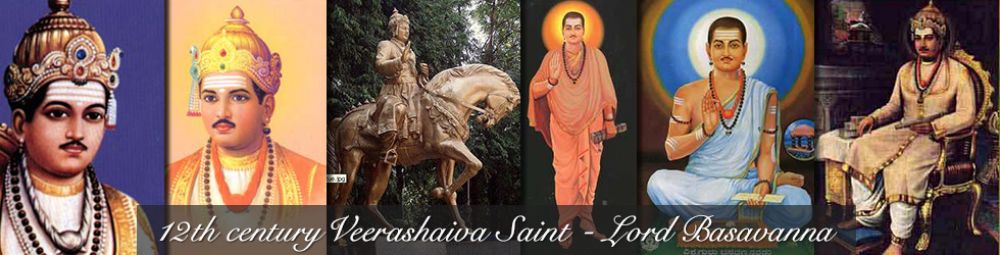
Veerashaivism historically speaking is a fragrant, full-fledged and full-blown flower of Shaivism. Shaivism has flourished with minor differentiations, from pre-Vedic times to the end of the 11th century and its exponents have hailed from the North as well as from the South. But the beginning of the 12th century saw the ascendency of Jainism and Vaishnaivism and the decadence of Shaivism. By the middle of the 12th century, there appeared on the horizon of the religious firmament of Karnatak, a great saint/philosopher/religious teacher/social reformer all rolled into one and named Basava, who rescued Shaivism from its decadence, freed it from the shackles of Varnashrama and gave it a new dimension. It is this that revived, regenerated and revolutionized Shaivism which over the years has come to be known as Veerashaivism. In the words of Dr. Radhakrishnan, “… Basava …. gave to Veerashaivism a prophetic turn and a popular appeal.”


Veerashaivism is a form of Shaivism with an integral and distinct aspect of its own. The word Veera prefixed to Shaiva is intended to make the distinction between the two. The characteristic feature of Shaivism is the Shivalinga form of worship in temples, Shivalinga being a plastic representation of the self-existent truth. But the distinctive mark of Veerashaivism is the Ishtalinga form of worship; that is to say, it advocates the wearing of Linga upon the body of each person so that the body becomes a temple fit for God to dwell in. The Linga thus worn becomes a symbol of the presence of God not in the far-off heavens but in the very cells of the body. The wearing of Linga with the constant remembrance of the Divine, envelops the habit of living in actual contact with God. This faith has adherents numbering about eight millions, scattered all over India, though concentrated mainly in Karnatak.

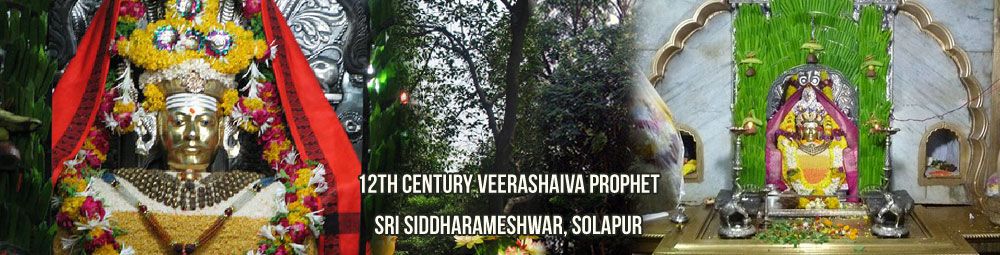
It is generally conceded that in the Veerashaiva Faith there are five Prophets and they are ALLAMA PRABHU, BASAVANNA, AKKAMAHADEVI, CHANNABASAVANNA and SIDDHARAMA. The life and teachings of these Prophets have been an inspiring force for vibrancy of Veerashaiva faith. Akkamahadevi is the Prophet of emotion, Basavanna is the Prophet of action while Allam Prabhu is the Prophet of intuition or he is the MESSIAH.

In the words of Sri Aurobindo, “The Messiah is the Divine seer will descending upon the human consciousness to reveal to it the Divine meaning behind our half-blind action and to give along with the vision the exalted will that is faithful and performs, and the ideal force that executes according to the vision.”

During the 12th century, there was a galaxy of Lingayata or Veerashaiva saints in Karnatak. They were the apostles of Veerashaivism. The number of these saints was more than two hundred. Amongst them there were thirty women mystics of whom Akkamahadevi was the beacon light. Basava and Allamaprabhu were the two distinguished names that shone brilliantly in the firmament of the Lingayata faith. It was they who were a cut above all other saints and gave a decisive turn to the renaissance of the 12th century. Almost all the saints have sung their realization in different strains and expressed their views and opinions on men, society and God in varied sayings. The collection of these sayings is known as the Vachana-shastra, the Scripture of the Lingayata faith.

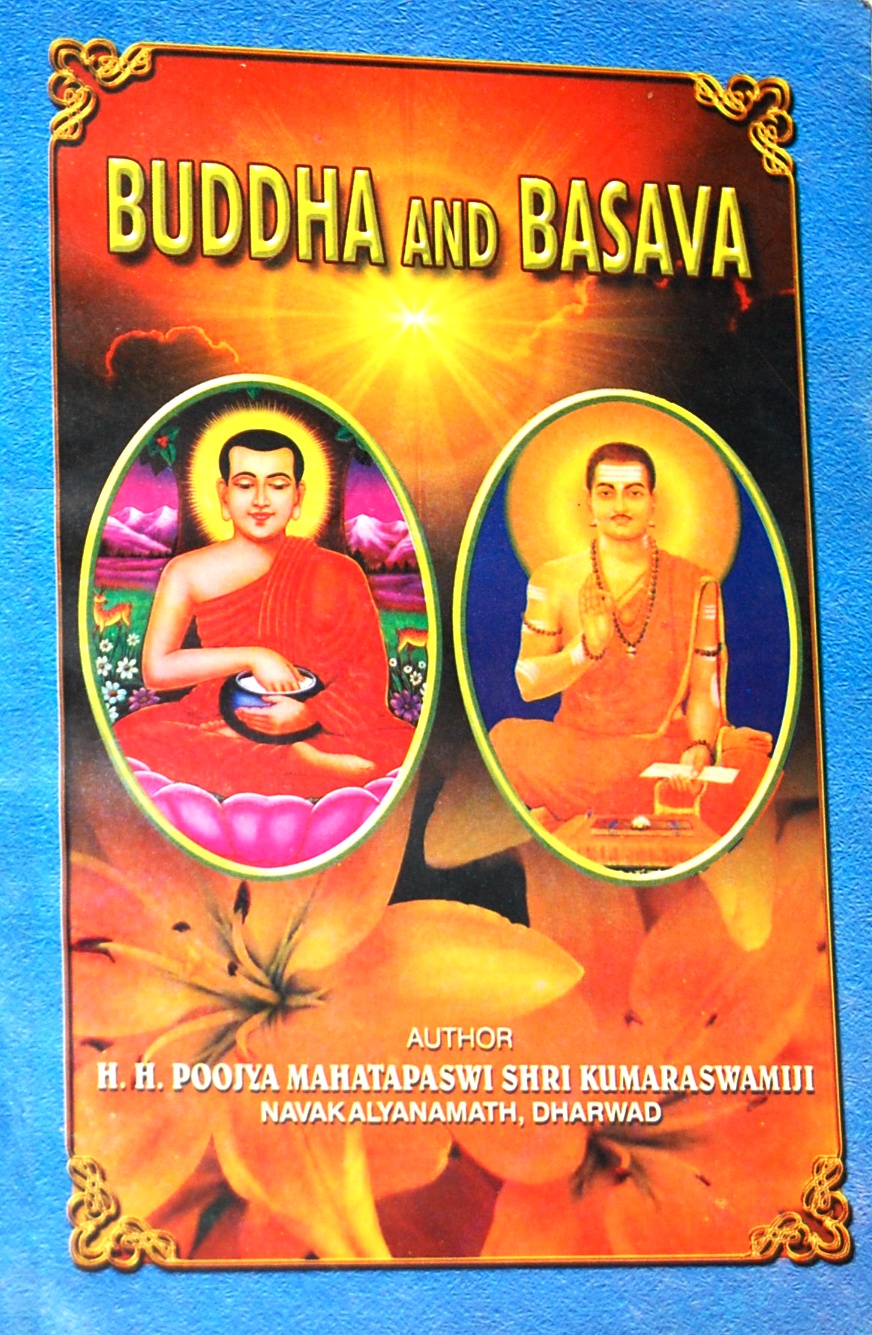
Basva was a great prophet. The greatness of man does not consist in his isolation from his fellowmen. A man, no matter whether he is regarded as a prophet or an incarnation of divinity, lives as other men. The physical plane is the same for all and the only distinction lies in the moral and spiritual spheres. Christ was a carpenter’s son and lived a humble life and mixed with humble folks. Buddha obtained his daily bread by begging and lived on terms of familiarity with his disciples. Basava led a simple life, mixed with common men, though he was a powerful minister. The time comes when the voices lifted in blame are stilled and the worth of a man is placed beyond reproach and criticism. Pilate, priest and Pharisees have passed away. Who now speaks ill of Jesus? Buddha was maligned by Devadatta and others spoke ill of him. But the time has stilled those self-serving voices. Basava was criticized by columminators but the time had drowned their voices forever. Today, Basava stands acknowledged as one of the greatest prophets ever to grace this earth.

A genuine reformer appears once in a millennium. He appears to review the past history of our social conditions and to set them in a new order. His task is not one of a revolution but of readjustment. What we observe is partly the same scene but in a different and more distant perspective. There are new and strange objects in the foreground to be drawn accurately in proportion to the more familiar ones, which now approach the horizon, where all but the most eminent become invisible to the naked eye.

The movement of reformation inaugurated by Basava had its far reaching effect upon the social life of the nation. So long as we view Basava in the context of Veerashaivism, we miss his personality and his profound teaching. Though he was born in Karnataka, he belonged to the whole of mankind for his heart relented for the poor and downtrodden everywhere. He taught us one of the main principles of Democracy by saying that the roots of social life are embedded not in the cream of society but in the scum of society.

Basava denounced with great vehemence the age-long injustice meted out to women in Hindu society. To him the subjection of woman was as much a blot on Hinduism as untouchability. If Hindu society were to become a progressive unit in human evolution, woman should be treated as the equal of man. With this motive in view he vindicated the rights of woman both ethically and economically. He said that the difference in sex and physical forms would denote only difference in function and not difference in status. Woman is the complement of man and not his inferior. Basava agrees with Gandhiji when he says, “To call woman the weaker sex is a libel, it is man’s injustice to woman. If by strength is meant brute strength then indeed is woman less brute than man. If by strength is mean moral power, then woman is immensely man’s superior. Has she not greater intuition, is she not more self-sacrificing, has she not greater power of endurance, has she not greater courage? Without her man could not be. If non-violence is the law of our being, the future is with woman.”
One of monumental works that Basava did was the formation of the institution named Anubhava Mantapa, the Academy of the experience. This Academy was in a sense a true university, for it was a community of men and women, of high and low, irrespective of caste, creed and rank, bound together by zeal for spiritual knowledge. It was not mere lecture hall although a formal discourses were often held. Its function was to sense the soul, to turn it to light, but the soul must see light for itself.

In the 12th century in Karnataka there was a galaxy of Lingayat saints, the preoccupation of whom was to realize God and to remould the individual life and social institutions by that realization. The self of the cosmos and the self of man are identically the same and so are one. The self or the individual is termed Anga which is Chit-rupa, the pure conscient. The self of the cosmos is termed Linga which is Sat-rupa, the pure existent. And that Anga and Linga are one and the same is proved by the subjective mode of worship. The realization of the one Being in the objective world-process through self-awarenes is Samarasya, delight equal and equable. In the inscriptions of Mohenjo Daro and Harappa four distinct and clear terms are found to have referred to, An, Amma, Anil and Attam respectively stand for Shiva, Shakti, Sharana and Srishti.

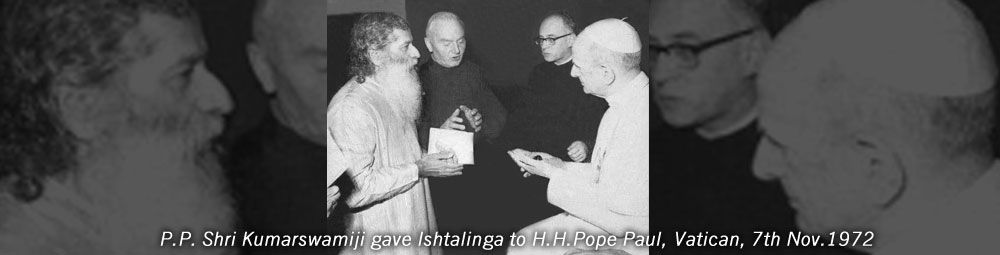
A Veerashaiva is often addressed as Lingavanta or Lingayata. What does Lingayata mean? Ayata means that which has come. In Veerashaivism there is convention that the Guru or the preceptor bestows Linga upon the child after it is born. Again the Guru confers Linga upon the disciple at the time of initiation. In any case, the Linga must come from the Guru, and he who wears Linga that has been given by a Guru is called Lingayata. The Linga worshipped in the temples goes by the name of Shivalinga or Sthvaralinga and the Linga worshipped and worn on the body goes by the name Ishtalinga.

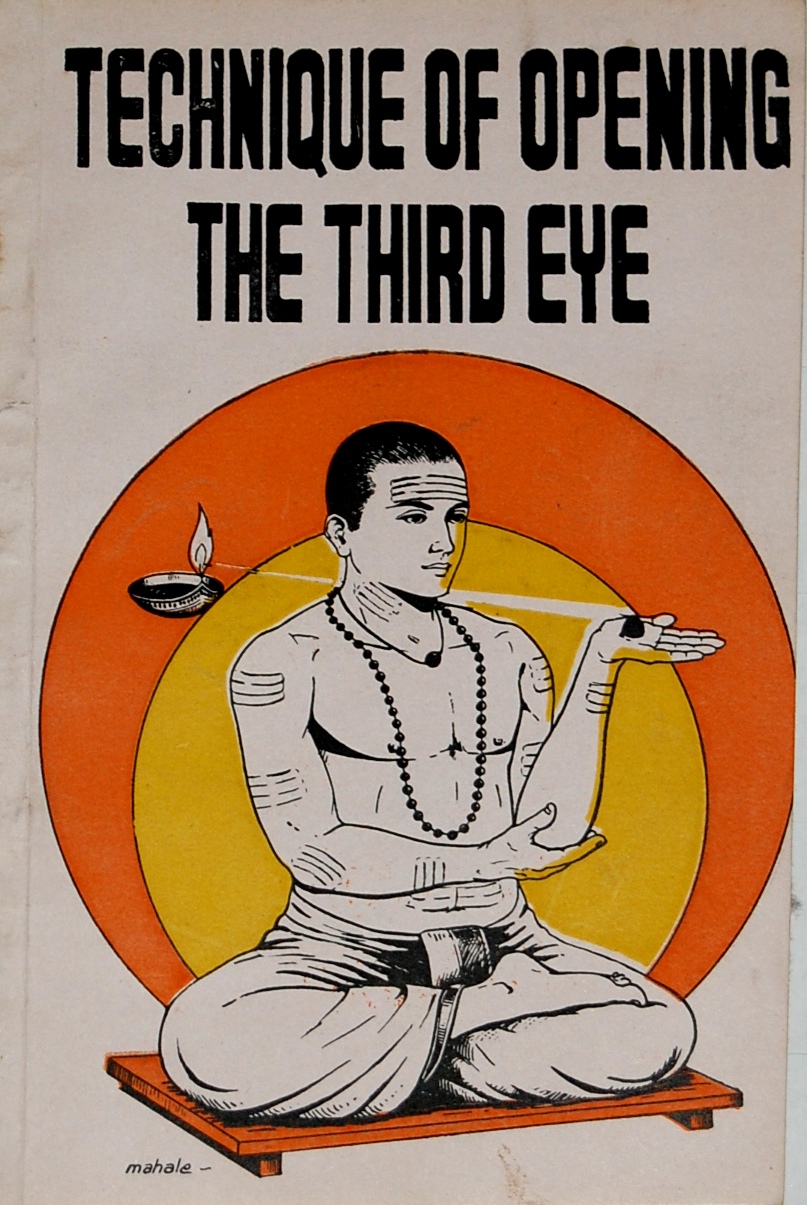
Ishtalinga is a miniature of Shivalinga. Ishtalinga is an indispensable means for the practice of Shiva-yoga. Shiva-yoga is a technique of opening the third eye. The third eye is an enigmatic organ having a universal mythological history. It is the middle eye of Shiva; it is the eye of Horas of Egyptian tradition, it is the horn of the unicorn. The third eye is an organ apparently dormant but innately acquired by mankind whose awakening is the birth right of every individual. It is an organ of inner vision which embraces eternity, while the two physical eyes look before seeing neither the past nor the future.

In Yoga-Shastra the pineal gland is spoken of as the third eye, the function of which takes place through the middle of the forehead. This third eye or the pineal gland is atrophied in man;the whole process of Shiva-yoga is directed to the awakening of this dormant pineal gland. It is a rudimentary organ in most people but it is evolving though slowly. It is possible to quicken its evolution into a condition in which it can perform its function of apprehending events comprehensively to give personal access to wisdom.

Man is neither a machine nor a device but a being, a complex being indeed. He therefore cannot be saved by machinery; only by a spirito-psychological path, by an entire change which shall affect all the members of his being, can he be liberated from his discords and imperfections. It is admitted on all hands that there is a path which leads to the perfecting of man, a path indispensable to the pilgrim’s progress on his of self-realization. Shiva-yoga as a path at the perfecting of man in all his members, at the spiritualization of all his forces. That there is a path which brings about at inner change in man is recognized by all the great religions; and the chief features of that path are described in similar terms in every one of the great faiths of the world. In Shiva-yoga the path is characterised by six stages – Sat-sthala, namely Bhakta Sthala, Mahesha Sthala, Prasadi Sthala, Pranalingi Sthala, Sharana Sthala and Aikya Sthala.
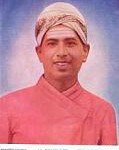
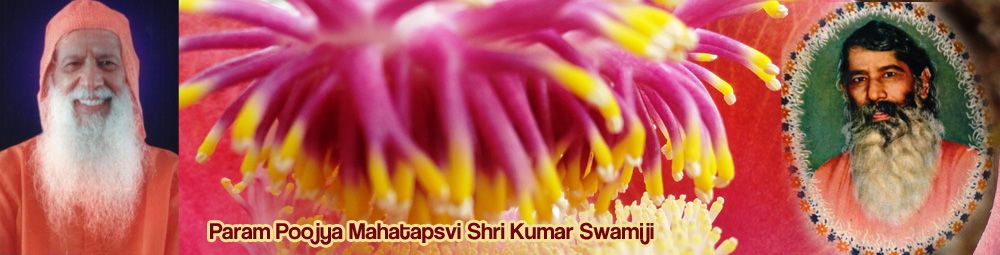
                                                                                                   – From the teachings of Param Poojya Shri Kumarswamiji